



Blog
What is a charge point operator (CPO)?
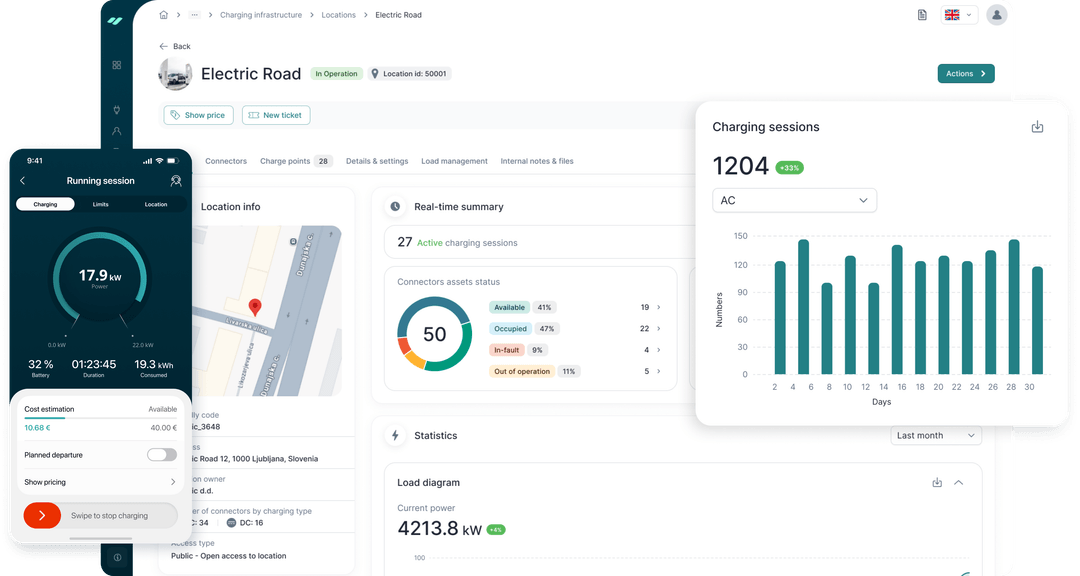

A charge point operator (CPO) owns or runs the physical EV charging infrastructure: the hardware, its uptime, and the service drivers get at the plug. A CPO earns from session fees and site host revenue shares, and carries the cost of keeping every charger live.
Two companies can both describe themselves as EV charging businesses and have almost nothing in common. One owns chargers and worries about uptime. The other owns drivers and an app and worries about charging services offered to the EV drivers and fleets. The first is a charge point operator (CPO). The second is an eMobility service provider (EMSP or MSP).
Which one you are, or which combination you run, decides how you get paid, who your customers are, and what your charging platform has to do. Plenty of operators run both roles without realizing it, then buy software that only fits one.
This guide draws the lines: what a charge point operator does, what an eMobility service provider does, the third model sitting between them, and how your role shapes what you need from an EV management system.
1. CPO in EV charging: what the role covers and how it earns
A charge point operator owns or manages physical charging infrastructure and is accountable for it. That means hardware uptime, network reliability, and the quality of every session delivered at the site. When a connector fails at a motorway stop on a Friday evening, the CPO is who the driver blames and who pays to fix it.
The CPO revenue model is built on the asset: session fees from drivers, revenue shares with site hosts, and in some markets capacity payments from the grid. Because the operator carries the cost of keeping chargers live, margin tracks uptime and cost-to-serve more tightly than it tracks price per kWh. A charger that is offline earns nothing and still costs you rent, a grid connection fee, and the capital sitting in the ground.
That puts specific demands on the software the CPO uses. A charge point operator needs:
- Asset management and monitoring across the whole estate, in real time.
- Hardware-agnostic OCPP, so the network isn't tied to one charger brand's roadmap or pricing.
- Billing and access control that captures every session accurately, including the ones that fail halfway through.
- SLA reporting on uptime and charging success rate, the share of started sessions that finish and bill correctly.
- Automated fault recovery, so a connector fault doesn't always mean a truck roll.
The last one is where cost-to-serve is won or lost. A remote reset costs nothing. A technician driving two hours to power-cycle a charger can cost more than the site earns that week, and at a few hundred chargers those trips become the largest controllable line in your operating budget.
Case study: Petrol operates as both CPO and EMSP roles on one platform, with the ERP and billing integration that a utility of that size requires. That combination, rather than the pure CPO model, is where most operators end up once they start selling to drivers directly. For the full picture of what the platform underneath does, see the complete guide to what a CPMS is.
2. What is an eMobility service provider (EMSP)?
An eMobility service provider runs the driver-facing layer. The EMSP issues the app, the subscription, and the roaming card that lets a driver charge across networks it does not own; its customers are drivers and B2B fleets.
The EMSP revenue model is built on that relationship: subscription fees, plus the margin between what it pays a CPO for a roaming session and what it charges the driver. Where the CPO owns chargers, the EMSP owns the customer, and the two businesses fail in different ways. A CPO fails when hardware sits idle. An EMSP fails when drivers churn to a competitor's app after one bad session on somebody else's network.
Software for an eMobility service provider is built around the driver record and the roaming contract. An EMSP needs:
- Roaming connectivity through OCPI and OICP to networks like Hubject and Gireve or aggregators such as ENAPI, in both directions. Enabling easy new roaming connection with whichever desired CPO or EMSP, being Plugsurfing, Deftpower, Octopus, E.ON, Ayvens, Tesla, or others.
- A white-label driver app carrying its own brand rather than a vendor's.
- Tariff flexibility to price subscriptions and roaming sessions independently, per network, per market, per customer group, configured per site, and per charger group.
- Clean settlement and reconciliation across every network its drivers touch, because roaming margin disappears fast inside disputed charge detail records.
The roles often overlap in practice. Most operators of any scale run both, selling to drivers through an app while operating their own chargers underneath, which is why buying a platform that only serves one role is such a common and expensive mistake. If you are working out what both CPOs and EMSPs need to run their business successfully, the complete CPMS guide covers the platform layer end to end.
3. The eMobility solution provider: a third model
A third role is worth naming because it is growing fast: the eMobility solution provider, which operates charging infrastructure on behalf of corporate clients in a B2B2C model.
The use cases are familiar. Workplace charging runs for a business. Destination charging runs for a hotel chain. Depot charging runs for a fleet. The provider operates the charging, and the client keeps the customer relationship.
This model lives or dies on sub-operator support. It needs sub-CPO orchestration, fleet management, multi-account management, and white-label delivery under each client's branding, so one provider can serve many clients from one platform without standing up a separate deployment per client.
Providers who try it on a platform without native sub-operator support end up running parallel systems and reconciling them by hand, which caps how many clients they can take on before their B2B operations break.
4. How your role shapes your CPMS requirements
Your role decides which capabilities are non-negotiable. One platform can serve all four, but only if it is built as a single instance.
- CPO only. You own the chargers. Prioritize uptime SLA, OCPP hardware coverage, billing accuracy, and fault automation.
- EMSP only. You own the driver. Prioritize OCPI 2.3 depth, roaming breadth (Hubject, Gireve, e-clearing), and a white-label app.
- CPO + EMSP. You own both. Prioritize a single instance covering both roles, with no integration glue between separate products.
- eMobility solution provider. You own client operations. Prioritize sub-operator orchestration, multi-account management, and white-label delivery per client.
Two things cut across all four roles.
The first is the pricing model. A CPMS that takes a session commission cuts your margin at every transaction, and it lands hardest on EMSPs reselling roaming sessions on thin spreads, where a few percent of session value can exceed the spread itself. Ask any shortlisted vendor whether the contract takes a percentage of session revenue and get the answer in writing.
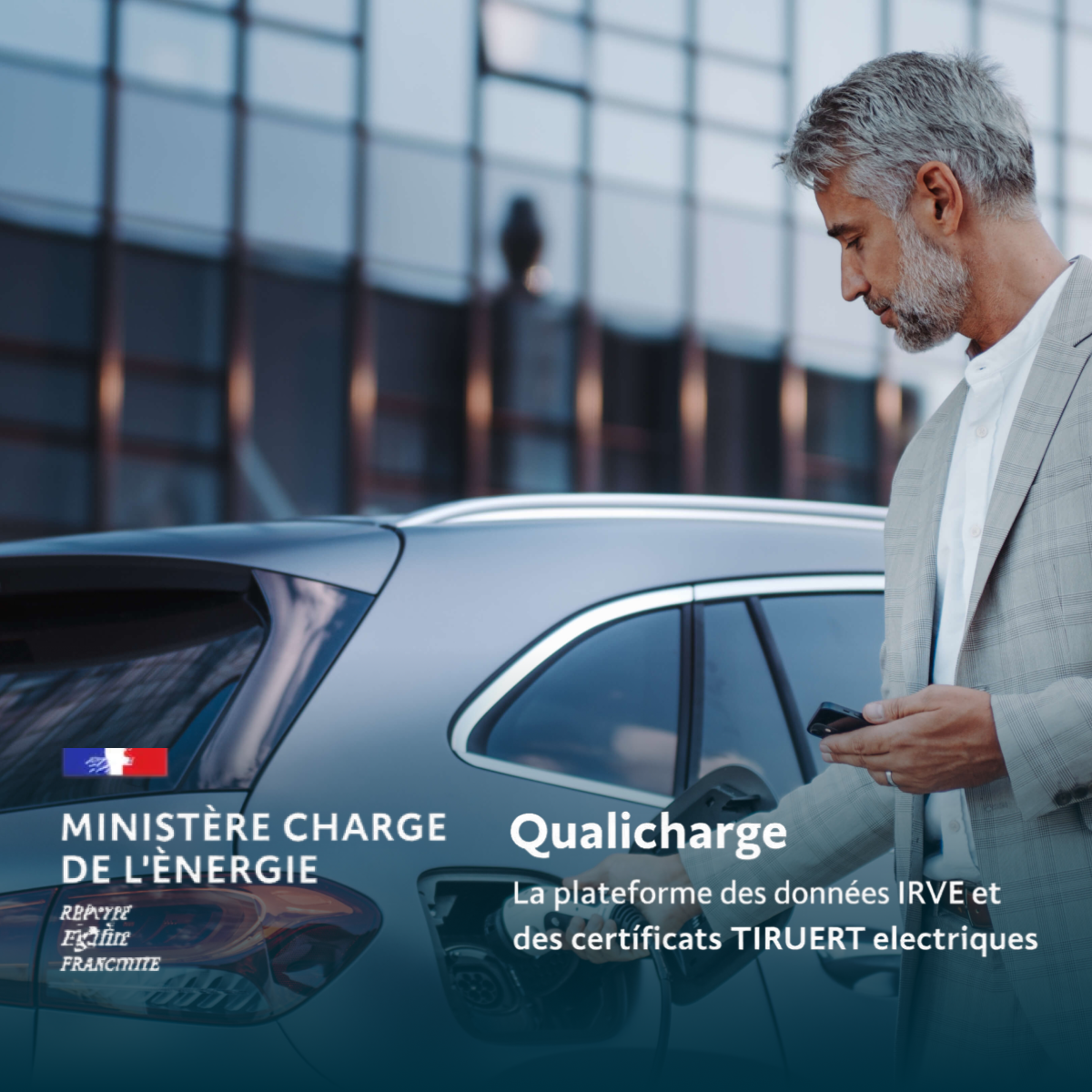
The second is compliance, which follows the role. As a CPO running public chargers in the EU, AFIR obligations land on you: ad-hoc contactless payment, price transparency before a session, and no app as an obligation. National rules stack on top. In France, QualiCharge governs how charging data is reported, and a capable platform files that reporting natively instead of making your team assemble it by hand every month. See how Ocean enables compliant operations in France with QualiCharge.
If you run more than one role, the requirements stack. Stitching separate products together for each is where operational debt starts, and it compounds quietly: every new market or client adds another integration nobody owns.
5. Frequently asked questions
What does a charge point operator do?
A charge point operator owns or manages EV charging hardware and answers for its performance: installing and maintaining chargers, keeping them online, setting tariffs, handling driver access and payment at the plug, and reporting on uptime. The CPO carries the operating cost of the network and earns from session fees and site host revenue shares.
What does CPO mean in EV charging?
CPO in EV charging is shorthand for the EV charging operator side of the market: the businesses that run the physical infrastructure, as distinct from the eMobility service providers that sell charging access to drivers through apps and subscriptions. Utilities, fuel retailers, real estate owners, and dedicated charging companies all operate as CPOs.
What is the difference between a CPO and an EMSP?
The CPO owns the chargers and is responsible for uptime and the session at the plug. The EMSP owns the driver relationship and sells access to charging across many networks through an app, subscription, or RFID card. The CPO's asset is hardware. The EMSP's asset is a customer base.
Can one company be both a CPO and an EMSP?
Yes, and most operators past a certain size are. Running both means operating your own chargers while also selling app-based access to drivers, including on networks you don't own. It requires a platform that handles both roles from one instance, since running two separate systems means reconciling roaming, billing, and driver data between them.
What software does a charge point operator need?
A charge point management system (CPMS): the platform that connects chargers over OCPP, handles monitoring and fault response, runs tariffs and billing, manages driver access, and connects to roaming networks. A CPO that also acts as an EMSP needs the same platform to cover roaming settlement and a branded driver app. Our EV charging management software guide covers the full platform requirements.
Do charge point operators have to comply with AFIR?
For public charging in the EU, yes. AFIR requires ad-hoc contactless payment at the charger, price transparency before a session starts, and no mandatory subscription or app. Those obligations sit with the operator, which makes them a platform requirement rather than a paperwork exercise.
6. The bottom line
The role you play, or the combination of roles you play, sets your revenue model, your roaming relationships, and the shortlist of platforms that can actually serve you. A CPO buying for uptime and a fleet solution provider buying for multi-client billing are shopping in the same category for genuinely different products.
Get the role clear first, then test every platform against it. The operators who skip that step are the ones who discover the gap after signing, usually when a new client or a new market needs something the platform was never built to do.
If you are new to the category and want the fundamentals in one place, start with the complete CPMS guide. If you already know your role and want to see how the platform choice becomes a commercial edge, read how your CPMS choice becomes a competitive advantage.
Discover more Blogs




Our trusted partners


