



Blog
EV charging management software: the complete guide for CPOs
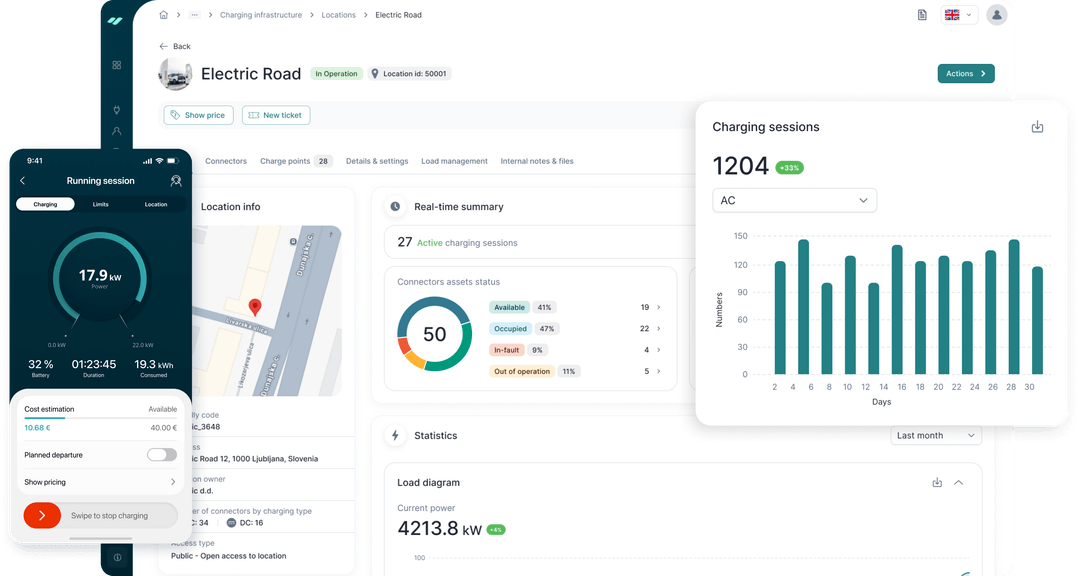

EV charging management software is the platform that runs an EV charging network end to end. It connects every charger over OCPP, handles billing and driver access, balances energy, and ties roaming, fleet, and sub-operator charging into one system. It turns a pile of chargers into an operable, billable EV business.
Managing 2,000 charge points across five countries without the right software is like running a hotel chain without a property management system. Everyone improvises, nobody can see the full picture, and the people who suffer most are your customers. The chargers are the visible part of the business. The EV charging management software behind them dictates whether the business actually works.
Most operators treat that software as an IT decision: a backend to keep the lights on. The operators who win in the EU market treat it as a revenue decision. Your platform sets your cost per session, your compliance exposure, and the ceiling on how many use cases you can serve before you have to buy or integrate a second system.
This guide covers:
- what a serious EV charging management platform has to do,
- where platforms diverge once you push past a few hundred chargers, and
- the questions nobody warns you to ask before you sign.
It is written for CPO and EMSP operations leaders evaluating their current platform or building the case to switch. If that is you, work through it in order. If you want a specific layer, jump to it:
- What EV charging management software actually does
- The six use cases one platform should cover
- OCPP: the standard that defines what's possible
- The pricing models that decide who benefits
- Smart charging and load management
- AFIR and what EU compliance demands
- What to demand from your vendor
- Build, buy, or migrate
1. What EV charging management software actually does
A charge point management system (CPMS) is the engine inside EV charging management software. The terms get used interchangeably, and for most operators they describe the same thing: the platform that sits between your chargers and everyone who depends on them. If you are still getting oriented on the category itself, start with the complete guide to what a CPMS is and come back here.
The category collects a lot of names, and most of the difference between them is marketing. EV charging management system, EV charging station management software, electric vehicle charging software, CPMS, CPO system, CPO platform: same layer, different brochure. Where the naming does signal something real, it is scope. "Station management software" is often a single-site tool built for a property owner with eight chargers and one tariff. EV charging network software implies the opposite: multi-site, multi-tenant, multi-country, with roaming and settlement underneath. Ask which one a vendor actually built before you sit through the demo. The gap between the two is years of engineering, and it does not close during an implementation.
Strip a network-grade platform down, and it does nine jobs.
1.1 Charger connectivity and OCPP communication
Every charger connects to the platform over OCPP. This is the layer that makes a network hardware-agnostic, so you can run mixed brands of AC and DC hardware from one system instead of one vendor's restricted ecosystem. It is also the layer that breaks most often in production, because "speaks OCPP" and "speaks OCPP the same way as the last charger you bought" are two different claims.
1.2 Real-time monitoring, alerts, and automated response
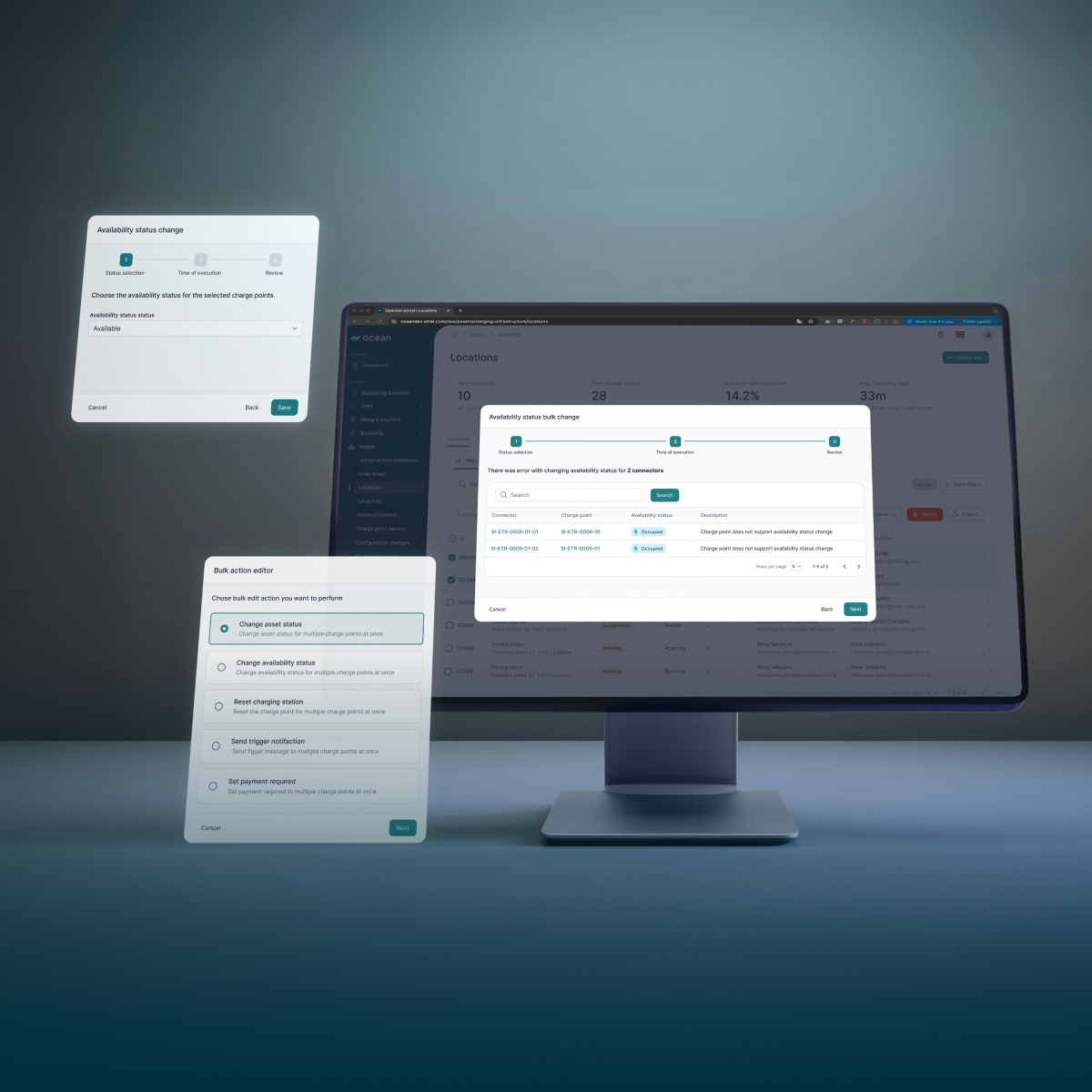
The platform tracks status, faults, and session data across the estate, then acts on it. The automation layer matters as much as the dashboard. Ocean Automation, for example, watches OCPP message events and triggers a response (a remote reset, unlock connector, a ticket, notification, a webhook) the moment a defined event fires, instead of waiting for a human to read an alert. At 50 chargers, a person reads every alert. At 5,000, nobody does, and the alerts that go unread are the ones that become truck rolls. A desired element of a modern EV charging platform is automation that decreases human-run operations while automating everything that can be automated. This decreases CPOs’ operational effort and decreases costs while increasing charger availability and the system’s overall uptime.
1.3 Billing, tariff management, and invoicing
Per-kWh, time-based, flat, dynamic, and subscription pricing, configured per site and per charger group, with invoicing and reconciliation behind it. This is where margin is won or lost, and it is where a platform built for a single site shows its limits first. One tariff table is easy. Four hundred tariff tables across six countries, three currencies, and two tax regimes is a different product entirely.
1.4 Driver access management
RFID, app, payment terminals and ad-hoc contactless access, with authentication and authorization resolved before energy flows. Plug & Charge and Autocharge belong here too: both take the card and the app out of the driver's hands, and both measurably reduce failed session starts.
1.5 Roaming
OCPI and OICP connections to networks like Hubject and Gireve or aggregators such as ENAPI, so drivers from other networks can charge on yours, and yours can charge elsewhere. Enabling easy new OCPI connection with whichever desired CPO or EMSP, being Plugsurfing, Deftpower, Octopus, E.ON and others. OCPI is maintained by the EVRoaming Foundation and is the protocol that carries tariffs, session records, and location data between platforms. Through roaming, Ocean operators reach 1.09M+ charge points across Europe.
1.6 Sub-operator orchestration
The ability to run charging on behalf of others (retailers, property owners, fleet clients) under one network, each with their own view of their assets and revenue. Few platforms model this natively. The usual workaround – a separate deployment per partner – is what turns a good commercial idea into an operations problem you cannot staff.
1.7 Analytics and reporting
Utilization, revenue per charger, energy delivered, session success rate, and the exports finance and operations teams actually need. The metric worth insisting on is session success rate: the share of started sessions that complete and bill correctly. Uptime tells you the platform was reachable. Success rate tells you drivers got charged and you got paid.
1.8 Load management and smart charging
Distributing limited grid capacity across active sessions so you can add chargers without upgrading a grid connection. Covered in section 5.
1.9 The platform-versus-software distinction
This is the one that separates the field. A true platform runs all of the above from a single instance natively. A thin product bolts features together and makes you integrate the seams yourself, which means you inherit the integration work, the failure modes, and the version-upgrade coordination between components you did not build. A single instance is what lets one operator run public, workplace, fleet, and home charging without standing up a separate deployment for each.
2. The six use cases one platform should cover
Any platform can handle one use case well. The question is whether it handles all six from the same instance, with shared billing, roaming, and reporting underneath.
- Public charging network: ad-hoc and subscribed drivers, AFIR-compliant payment, roaming reach.
- Workplace charging: employee access, reimbursement, cost allocation back to the business, and reporting.
- Fleet depot and home reimbursement: per-vehicle and per-driver accounting, heavy-duty vehicles or passenger EV fleets with home charging reimbursed accurately to the employer.
- Destination charging: hotels, retail, and real estate, where the site host wants their own reporting and their own numbers.
- Sub-CPO orchestration: running charging for partners who each see only their own chargers and revenue.
- Home charging: a driver app and reimbursement flow that ties private charging back into the network.
Most operators do not start with six. They start with one, win a contract that needs a second, and buy a point solution to cover it. Two years later they are running three platforms with three logins, three billing exports, and a finance team reconciling them by hand at month-end. Nobody chose that architecture. It accumulated.
The license fees are the small part. The real cost of siloed deployments is the reconciliation work and the missing view of the network as a whole. EZO Ireland runs all of this on one Ocean instance, operating as a CPO, EMSP, and sub-operator across five distinct use cases with a white-label app, instead of running five platforms that don't talk to each other. Consolidation is what makes network-level decisions possible at all. You cannot price a network you can only see in fifths.
3. OCPP: the standard that defines what's possible
OCPP (Open Charge Point Protocol) is the open standard language between an EV charger and its management platform. It is what lets one platform run chargers from many manufacturers, and the version a platform runs in production sets the ceiling on security, smart charging, and device management.
Hardware agnosticism depends entirely on OCPP. A platform that only speaks one vendor's proprietary protocol locks you in for the life of the network. Your hardware roadmap becomes their hardware roadmap, and your negotiating position disappears at renewal.
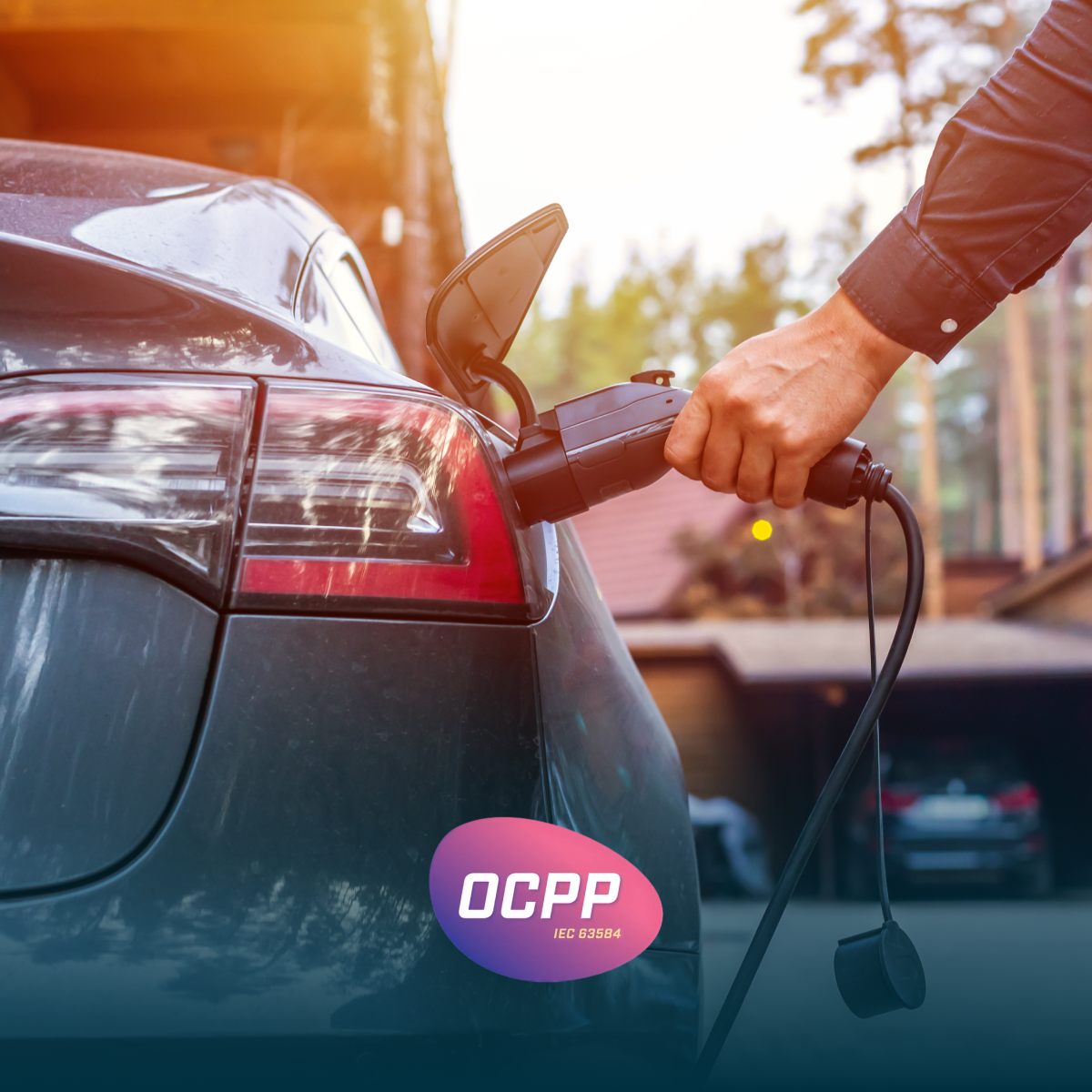
OCPP 1.6 JSON, maintained by the Open Charge Alliance, is the production workhorse across the industry today, Ocean included. It is stable and battle-tested, and it carries Plug & Charge (via the Open Charge Alliance's DataTransfer application note) and Autocharge, the two features that take cards and apps out of the driver's hands. OCPP 2.0.1 and 2.1 are the next generation: native security, richer smart charging, improved troubleshooting, and full ISO 15118 support in the core spec. Across the market, it is still largely in delivery, with full production launches targeted through 2026 & 2027. Ocean's new generation OCPP 2+ server is rebuilt and in delivery with a target date of February 2027; we run 1.6 in production now with features from 2.0.1.
Understand the security gap between the two versions before you treat 2.0.1 and 2.1 as a checkbox. OCPP 1.6 leaves transport security and certificate handling to the implementation, so platform-layer controls matter more today than the version number does. A 2.0.1 and 2.1 upgrade will not hand you security on its own: see how security works at the platform layer.
What "OCPP compliant" actually means is narrower than vendors imply. It means a charger and platform speak the same language, not that they understand each other in practice. Two chargers can both be certified and still disagree on how a transaction ends, how a meter value is reported, or what happens when the connection drops mid-session. Ask for the brands running in production. A logo on a data sheet proves nothing. For the full technical picture, including the dialect mismatches and real-world failures that break live networks, read OCPP in practice: what CPMS vendors don't tell you.
4. The pricing models that decide who benefits
Your pricing model is the single decision that compounds hardest over a 5-to-10-year network life. There are four common shapes:
- Per-session commission. The platform takes a percentage of every session. On thin charging margins, a few percent of session revenue becomes one of your largest line items over time. This is the hidden margin tax.
- Per-connector SaaS. A flat, predictable fee per connector. The upside of your own network stays with you.
- Modular licensing. Pay for the capabilities you use, added as you grow.
- CAPEX or enterprise license. A larger up-front commitment for operators who want it.
The difference between these four shapes stays invisible on day one, which is exactly why procurement underweights it. A commission model costs you almost nothing while the network is small and underutilized. It starts costing real money at the moment the network begins to work: as utilization climbs and sessions multiply, the commission scales with your success and a per-connector fee does not. You end up paying your platform vendor a growing share of the upside you built.
Zero commission is structural, and that is what makes it durable. A vendor whose revenue depends on a percentage of your sessions cannot give it up without rebuilding their business model. The ones who charge it rarely negotiate it away. Ocean's default is per-connector plus modules with no session commission, and a written zero-commission clause is available. We won't quote rates here; that is a conversation for Sales. For your evaluation, the task is simpler: ask every shortlisted vendor whether the contract takes any percentage of session revenue, and get the answer in writing, because "we're basically flat fee" and "there is no percentage clause" are not the same sentence.
Pricing model is a competitive decision, and it shows up in what you can afford to charge drivers. See how it plays out in practice.
5. Smart charging and load management, the capability most operators underuse
A retail park adds 30 chargers to an installation rated for 100 kW. Without load management, it cannot turn them all on. With dynamic load management, it serves 30 vehicles from that 100 kW connection and skips the grid upgrade.
That is usually the difference between a site that gets built in a year and one that waits 18 months for a grid connection upgrade.
Static load management distributes 100 kW that is dedicated only to charging stations in the most optimal way while monitoring power needs across all active sessions. Dynamic load management monitors actual available load on location, also taking into account other loads or power surplus on location in real time, and redistributes power across active sessions, so three cars at 2 AM get full speed, and thirty cars at 6 PM get a fair share. The site stays inside its limit either way, and in the common case no driver notices.
The mechanism is OCPP: the platform issues charging profiles to each charger and revises them during the session and as sessions start and stop. The upside of load management via OCPP is that you can mix different charger models of AC and DC in the same location and pick a load management strategy that best fits location needs.
For commercial and fleet sites, load management is now table stakes. API integration layer extends the same idea outward to the grid, letting a distribution network operator's capacity forecast shape charging at high-density sites for flexibility & Demand-response purpose. That is how operators get connections that would otherwise be refused.
6. AFIR and what EU compliance demands of your platform
For public charging in the EU, AFIR is not optional. The regulation requires ad-hoc contactless payment at the charger, price transparency before a session starts, and no mandatory subscription or app to charge.
That lands directly on your platform, and in more places than most operators expect. It needs an AFIR-ready ad-hoc payment path, the OCPI 2.3 data fields that feed national access points, and multilingual receipts. Price transparency is a tariff-engine problem before it is a signage problem. The price a driver sees before starting has to match what the session is rated at, in their language, including session and idle fees.
The reporting side is where networks quietly fail. National access points ingest your location and status data over OCPI, and if your platform publishes a charger that does not exist, or keeps publishing one that was decommissioned, you get flagged for "phantom chargers" in the national dataset. That is a data-model problem inside the platform, and it is not something you can fix with a spreadsheet after the fact.
Ocean enables agnostic integration with any payment terminal. Today we are integrated with Payter and Nayax and have open support for the Payment terminal API through which Ocean customers can connect with their existing Payment terminal fleet, for example, as Petrol did with their Worldline terminals.
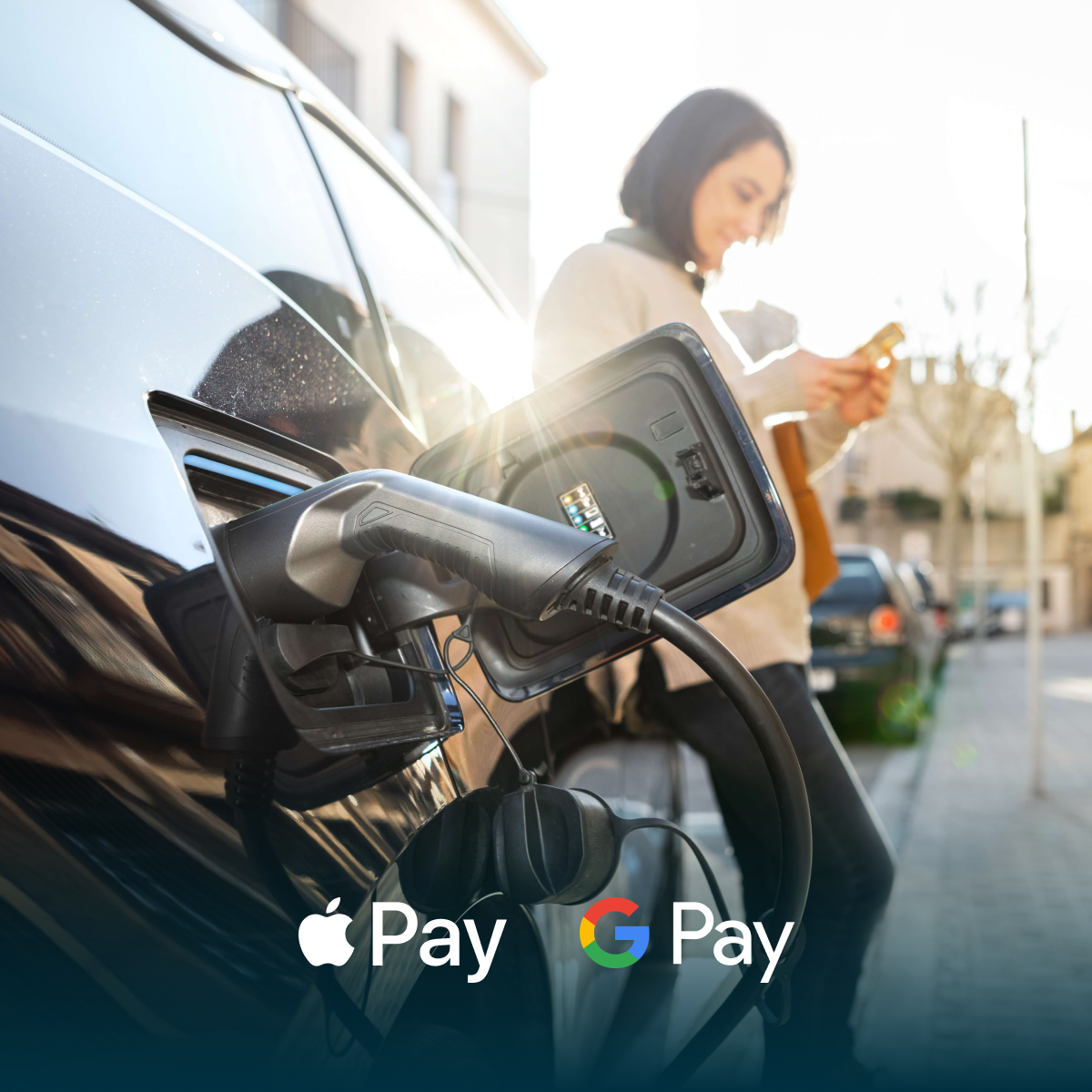
Ocean AdHoc Web App is another proof point here: QR-based, no install, AFIR-compliant. Wallet payments are already live for operators on Nets, Braintree & Global Payments, where Apple Pay and Google Pay run on the ad-hoc flow today, and that support extends across the ad-hoc app through 2026. Compliance has to be built into the platform. Operators who bolt it on afterward are the ones scrambling when an audit arrives.
7. What to demand from your CPMS vendor
The decisions that matter rarely appear on a feature checklist. Put these eight to every shortlisted vendor, and write the answers down.
- OCPP version in production, not on a roadmap. Ask which version runs live today and for the dated plan for 2.0.1 & 2.1.
- Hardware agnosticism, proven. How many charger brands run in production, not "supported in testing"? Ask for the list, then check whether your specific models are on it. Ocean runs 210+ OCPP charger models in production.
- Roaming integrations. Which networks, and in both CPO and EMSP roles? A platform that roams as a CPO but not an EMSP covers half your business.
- Sub-operator support. Native sub-CPO orchestration, or a workaround? Ask to see a partner's view of their own estate in a live demo, not a slide.
- SLA transparency. Is uptime contracted, and is it written? Ocean runs at 99.8% uptime under a contracted SLA.
- Data ownership and export rights. Whose data is it, and can you take it with you? Confirm in the contract that historical session data exports in a machine-readable format you can load somewhere else.
- Support model. Is operations included, or is it a tier you upgrade into? Platforms that sell support as an upsell tend to be built assuming you will not need much of it.
- Migration support. The question most buyers forget: when you outgrow this platform, who runs the cutover?
Two of these are the hardest to reverse. Data ownership decides whether you have a real option to leave. Pricing model decides whether leaving is worth the trouble. Everything else is a feature gap you can work around for a year.
Established platforms such as ChargePoint, Ampeco, and Driivz each answer these differently, and the honest comparison runs criteria by criteria, on facts you can verify rather than brochure claims. Ask all of them the same eight questions. The shortlist usually sorts itself.
8. Build, buy, or migrate: choosing your path
8.1 Build in-house
It makes sense in rare cases, and the true cost is always underestimated. The build itself is the small part. What follows is ongoing OCPP maintenance across firmware versions you do not control, roaming integrations that each carry their own certification process, a tariff engine that has to keep pace with regulation in every market you enter, a 24/7 on-call burden when a charger faults at 2 AM. None of that shows up in the original business case. Most operators who build eventually migrate away from it for exactly these reasons.
8.2 Buy a commercial CPMS
Faster to scale, a shared roadmap, and a vendor SLA. The commercial EV charging software market is now mature enough that the capability gap against a competent in-house build is wide and widening, particularly on roaming and compliance. The trade-off is fit and lock-in risk, which is why the pricing model and data-ownership questions in section 7 matter so much.
8.3 Migrate from your current platform
This is the most common real decision: operators who have outgrown a rigid system and need out without stranding drivers or losing billing history. The fear is downtime, and it is why operators stay on platforms that are actively costing them money. In practice, done with proper staging, a migration runs site by site with a rollback plan at each step, and the multi-day outage most operators are bracing for does not happen.
A short way to choose by profile: if you are pre-scale and technical with a narrow use case, building can work but rarely pays. If you are scaling across use cases or borders, buy a single-instance platform. If you are stuck on a platform that caps your OCPP version, skims commission, or can't model sub-operators, migrate, and the cost of waiting another year is higher than the cost of the cutover.
9. Frequently asked questions
What is the difference between a CPMS and EV charging management software?
In practice, none worth arguing over. CPMS (charge point management system) is the technical term for the platform; "EV charging management software" is the same thing described by what it does.
Does a CPMS work with any charger brand?
It should, if it runs genuine hardware-agnostic OCPP. The test is how many brands a vendor runs in production, not whether they claim "OCPP compliant." Ask for the production list and check your own models against it.
What is the difference between OCPP 1.6 and 2.0.1?
OCPP 1.6 JSON is the stable production standard today and supports Plug & Charge and Autocharge. OCPP 2.0.1 adds native security, richer smart charging, improved troubleshooting, and full ISO 15118 in the core spec, and across the industry it is still largely in delivery, with launches targeted through 2026 and 2027.
How much does EV charging management software cost?
It depends on the model: per-session commission, per-connector SaaS, modular licensing, or an enterprise license. The model matters more than the headline number, because commission compounds against your margin for the life of the network. For specific pricing, talk to the vendor's sales team.
Can one platform handle public, workplace, and fleet charging?
Yes, if it is built as a single instance. The same platform should run all six core use cases with shared billing, roaming, and reporting. EZO Ireland runs five use cases on one Ocean instance.
What is sub-CPO orchestration?
It is the ability to run charging on behalf of partners (retailers, property owners, fleet clients) under your network, where each partner manages their own assets and sees their own revenue through a dedicated interface, without you deploying a separate platform per partner.
What should a CPO look for when comparing EV charging software vendors?
OCPP version running in production, number of charger brands live, roaming coverage in both CPO and EMSP roles, native sub-operator support, a contracted SLA on session success rate, data export rights, and whether the contract takes a percentage of session revenue. The last two determine how easily you can leave.
10. The bottom line
Your revenue, your compliance, and your growth all run through this platform. The decisions buried in it (OCPP version, pricing model, sub-operator support, contracted SLA) decide whether your network becomes a cost center or a competitive edge.
None of those four is easy to reverse once a contract is signed, so they deserve real time now rather than at renewal. Operators who treat platform selection as a procurement formality tend to find out two years in, when the growth plan needs a system they do not have.
Across Ocean, that platform manages 1M+ drivers and delivering 15+ GWh monthly at 99.9% uptime, which is the kind of scale these decisions have to hold up at.
If you are evaluating or building a case to switch, start with the competitive lens: see how your platform choice becomes an advantage. If you are still getting oriented on the fundamentals, the complete CPMS guide is the place to start.
Discover more Blogs





Our trusted partners


