
Blog
Simplifying EV charging authentication with Autocharge
Learn how Ocean's Autocharge feature enables partners to offer automatic, app-free charging sessions - reducing friction at the charger and simplifying access across public and high-traffic locations.


Operating a public charging network means managing how every session starts. RFID cards get lost, apps create friction for first-time users, and each additional authentication step adds a potential support issue. As networks scale and driver expectations shift toward seamless experiences, the way vehicles are identified at the charger becomes an operational decision - not just a UX preference.
Why frictionless EV charging authentication matters
Every barrier between plugging in and charging is a potential drop-off point. For operators running public or high-traffic locations, the authentication method directly impacts station utilisation, driver satisfaction, and support volume.
The pressure is coming from multiple directions:
- Drivers increasingly expect a plug-in-and-go experience - especially at DC fast chargers, where speed is the entire point
- Managing RFID card logistics across large networks adds procurement, distribution, and replacement overhead
- Multi-network roaming introduces additional complexity when access methods differ between operators
For charge point operators & e-mobility service providers, the question is how to remove these barriers without introducing new technical complexity or compromising session control.
What makes Autocharge a practical option for operators
Autocharge sits between traditional authentication methods (RFID, app) and Plug & Charge, which follows the more complex ISO 15118 standard. It addresses the same goal - automatic session start when the vehicle is plugged in, but takes a lighter approach to get there.
Several factors make it relevant for operators today. Autocharge relies on charger-side vehicle recognition rather than digital certificates, which means there is no public key infrastructure to manage, no certificate provisioning chain, and no dependency on vehicle-side implementation. It uses a unique vehicle identifier transmitted when the connector is plugged in. The backend matches this identifier against the driver's registered account and authorises the session automatically.
This makes Autocharge faster to deploy than Plug & Charge, while still delivering the core experience drivers expect: plug in, charge, leave.
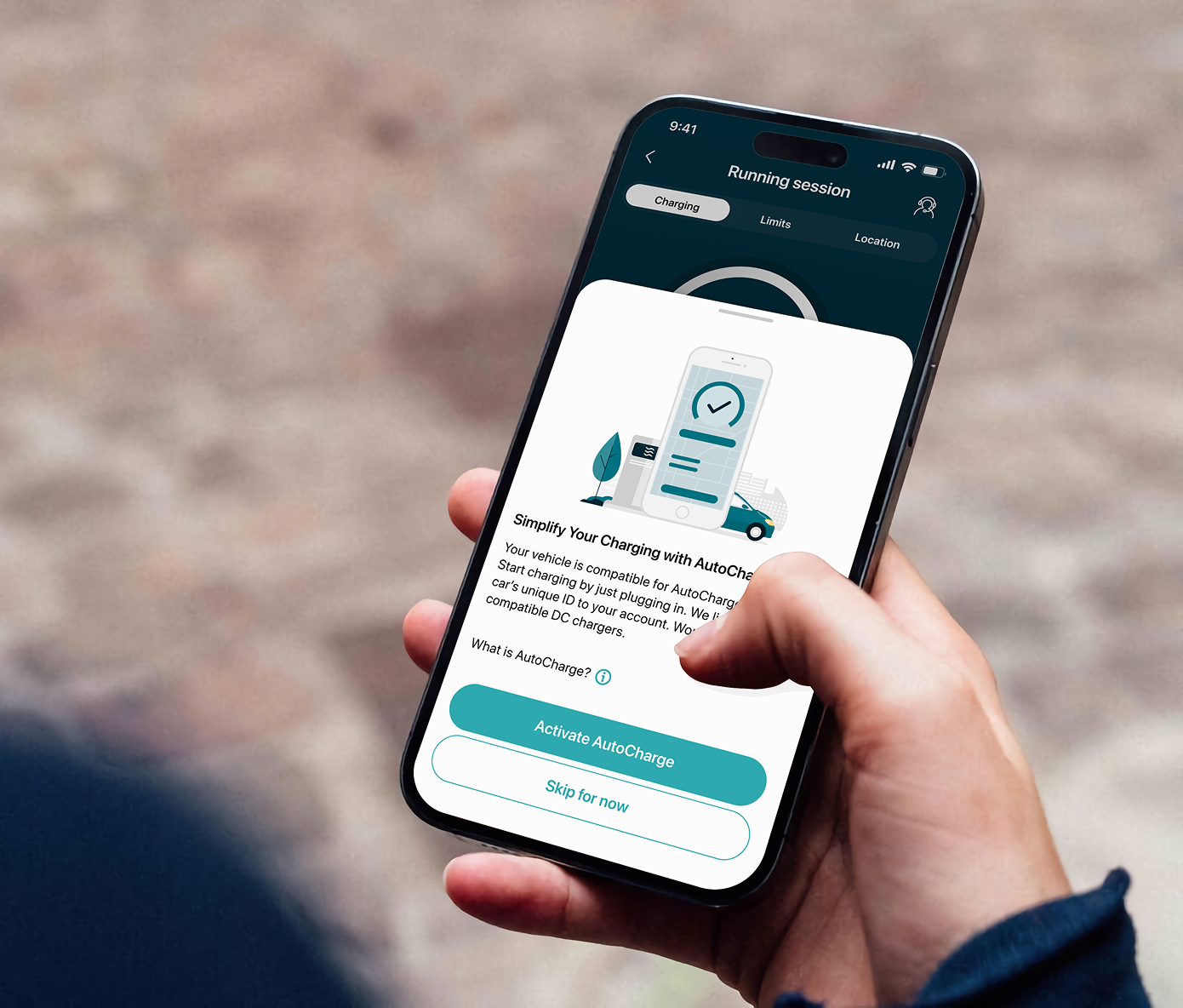
How it works in practice
When a driver connects their vehicle to a supported charger, the charger reads the vehicle's unique identifier through the charging cable. This identifier is sent to the backend via an OCPP Authorize message. Ocean's platform matches the identifier against the registered driver profile and, if recognised, starts the session without any manual authentication step.
The process requires a one-time driver registration, during which the vehicle identifier and payment details are linked. After that, every session at a compatible charger starts automatically.
On the infrastructure side, Autocharge requires chargers running OCPP 1.5 or later and is supported on DC chargers and ISO 15118-compliant AC chargers. Ocean's platform handles the identifier matching and authorisation logic, allowing operators to enable Autocharge across their networks without building custom backend integrations.
What Autocharge means for your charging network
For charge point operators & e-mobility service providers, Autocharge is a practical path to reducing session-start friction today. It is lightweight to implement, supported across a growing range of vehicles and chargers, and directly improves the experience you deliver at every compatible station.
Drivers register once, and every subsequent session starts automatically, without any action required at the charger, resulting in effortless use of your charging network.
Discover more Blogs


Our trusted partners