



Blog
The Monthly Wave: Ocean Platform Updates - Oct & Nov 26
17 November 2026
A roundup of everything Ocean shipped across the Operator Portal and the native mobile apps.
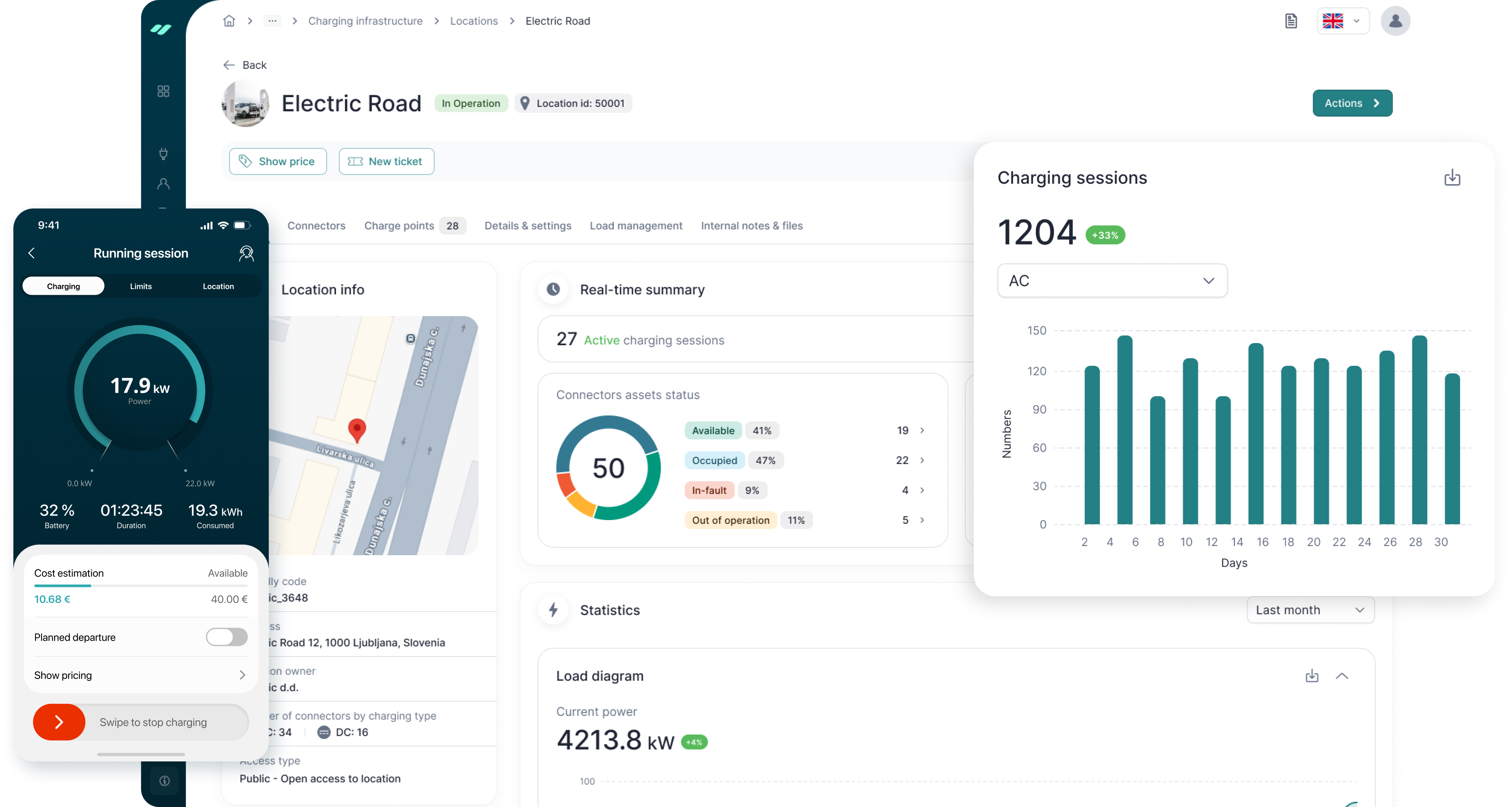

October and November brought two Operator Portal releases and a new version of the native mobile apps. Most of the work went into billing and payments: new ways to charge drivers, and less manual effort to collect what they owe. Alongside that, fleet managers get more detailed cost reporting, integrators get richer data from the API, and drivers get a redesigned charging screen that shows what a session costs while it's still running. Here's what shipped.
Operator Portal
Subscriptions billed up front, monthly or yearly
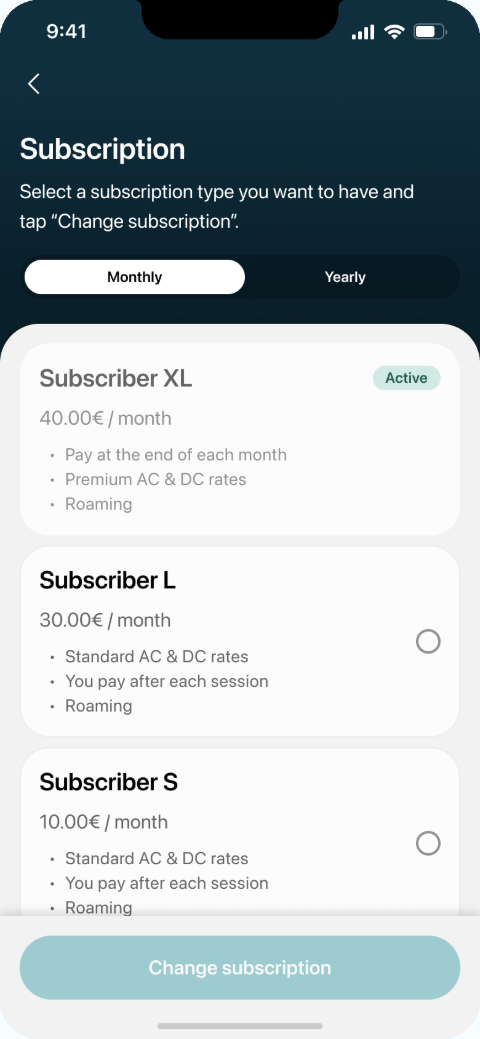
Subscription fees on Ocean used to be billed at the end of each period, after the driver had already charged. Operators can now sell a plan that drivers pay for in advance: a fixed monthly or yearly fee, charged automatically to the driver's stored card at the start of every period and issued as its own invoice, while charging sessions are billed exactly as before. Billing can run on one date for every subscriber, with a prorated first invoice, or on each driver's own sign-up date. Drivers choose a plan when they register or, if the operator allows it, switch to one later in the app, and an optional lock-in period keeps them on it for a set time. For operators, that means recurring revenue that arrives before the charging does, and a straightforward way to turn regular drivers into subscribers.
Monthly invoices that pay themselves
Drivers on post-payment contracts, who receive one invoice a month for all their charging, used to pay that invoice by hand, either through an external payment method or with Pay now in the app. Now the monthly invoice can be charged automatically to the driver's stored card as soon as it's created. If a payment fails, Ocean retries it up to ten times over the following nine days, and operators can choose to block new sessions until the invoice is settled, with the block lifted automatically once it is. Drivers can no longer remove their last valid card, so there is always a way to collect. The result is faster cash collection and far less time spent chasing unpaid invoices.
Skip the sessions that cost more to bill than they earn
A two-minute session that delivers almost no energy can still trigger a card transaction and an invoice, and payment providers usually have a minimum amount they will charge per transaction. Operators can now set a minimum billing amount: when a session costs less, no payment is taken and no invoice is created. The threshold applies across every payment provider and payment method on the instance, and skipped amounts are not collected later, so it works best set to the payment provider's own minimum. Fewer failed micro-transactions, and no invoices for sessions worth a few cents.
Stripe joins the payment providers
Operators can now choose Stripe as their payment service provider for both the Ad-Hoc web app, where drivers find a charger, start a session and pay without registering or installing an app, and Ocean's native mobile apps. One provider covers checkout on the web and in the app, and Stripe joins the payment providers already integrated with Ocean, such as Braintree, GlobalPayments and Nets.
Fleet costs, traceable down to the licence plate
Two releases, one fleet story. Fleet managers can now add a free-text note to every driver and vehicle in the Fleet Portal, most often a licence plate or a department. The note is saved with each charging session at the moment it starts, so when a car changes hands, earlier sessions keep the old note and new ones carry the new one, and every change is logged. That note also feeds a new Custom Report CSV, which breaks every session down charge by charge, with VAT, energy charged at home, at work or in public, and one row per item linked by a Session ID. For fleet managers working out what each driver spent, it's ready for a pivot table.
Richer data for integrators
The Urchin API, Ocean's REST API, picked up several additions that save integrators extra calls. Invoices now carry the same invoice number customers see, for example I-2026/161, and the tax level on every invoice line, which makes matching invoices to accounting systems simpler. Connector responses include the custom attributes operators define on locations, charge points, EVSEs and connectors. The API returns translated texts in the language the client asks for, and charge point message logs can now include the raw OCPP request and response payloads, which makes charger communication easier to troubleshoot.
Mobile Apps
A charging screen that shows the cost as it climbs
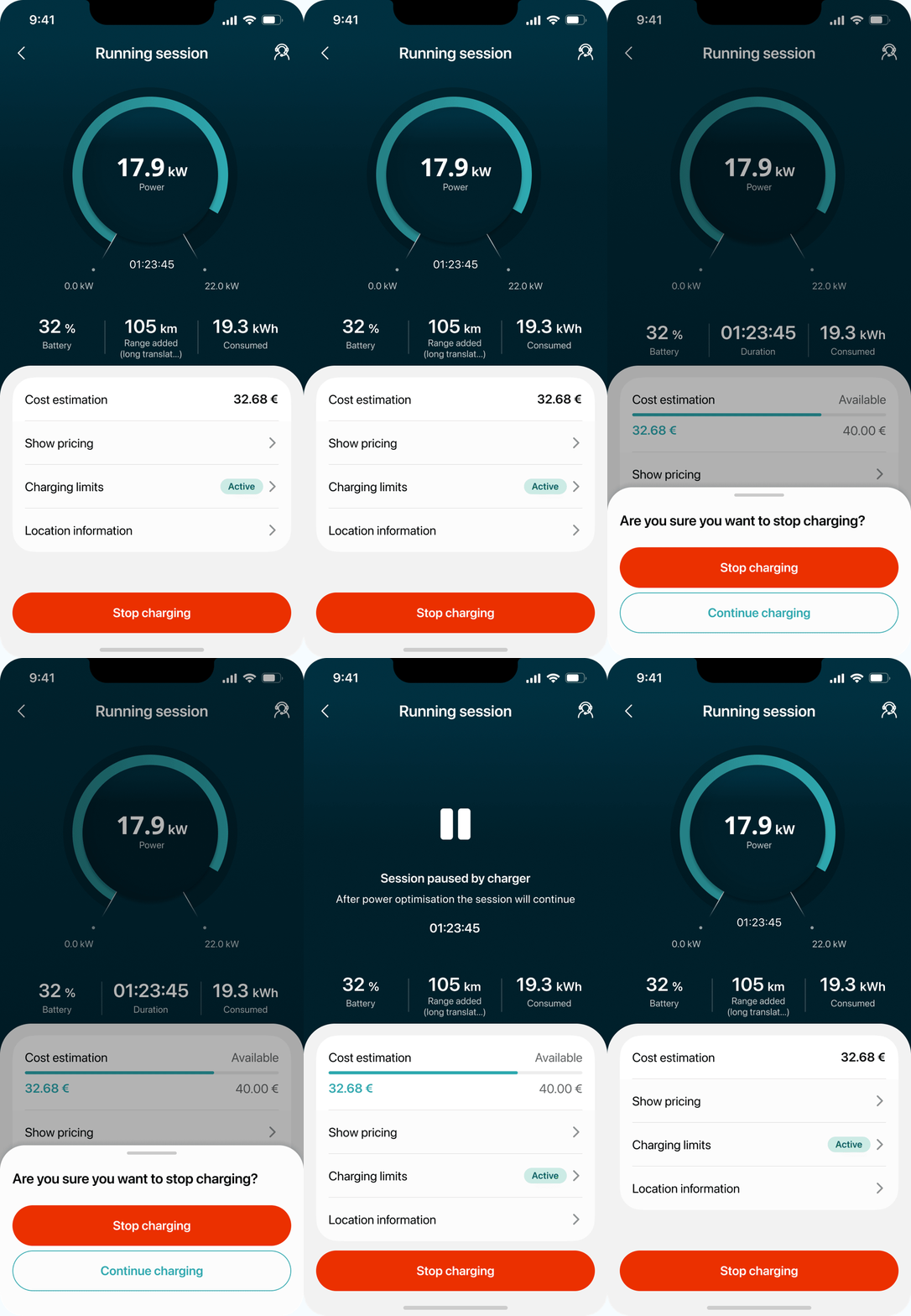
The latest app release redesigns the screen drivers see while charging, on both iOS and Android. It now shows a cost estimate for the session in progress, together with battery level, energy consumed and any charging limits. If the charger can't be reached, the screen says the data is temporarily unavailable and that the session may still be in progress, rather than leaving the driver guessing. When charging ends, a new summary screen shows start and end time, duration, total cost and a breakdown of the charges. Fewer surprises at the end of a session, and fewer "how much will this cost?" questions for support teams.
Also in this Release
In addition to the highlights above, the two portal releases brought another 10 improvements and 14 fixes.
Among the improvements: billing addresses are now shared with Braintree for stronger fraud checks, user vehicles draw on Ocean's central vehicle database so a corrected battery capacity or connector type updates for every driver at once, and password reset emails now come in separate templates for operators, fleet managers and drivers.
Among the fixes: sessions held back by load management now resume as soon as capacity frees up, instead of waiting at 0 A until the driver unplugs, the Ad-Hoc web app now gives slower chargers up to 80 seconds to start a session, DC connectors at roaming locations show their prices in the driver app.
On mobile, the closer default map zoom we mentioned last time arrived with this release, so the map can open at the same zoom level drivers get when they tap "my location". The iOS app now supports the iOS 27 scene-based app life cycle, and iOS and Android together shipped 19 bug fixes.
Catch your next wave
That's two months in one. We'll keep highlighting the changes that matter most, whether you're operating a charging network on Ocean or just keeping an eye on where the platform is headed. See you next month. 🌊
Discover more Blogs





Our trusted partners


