
Blog
The Monthly Wave: Ocean Platform Updates
1 October 2026
A roundup of everything Ocean shipped across the Operator Portal and the native mobile apps.
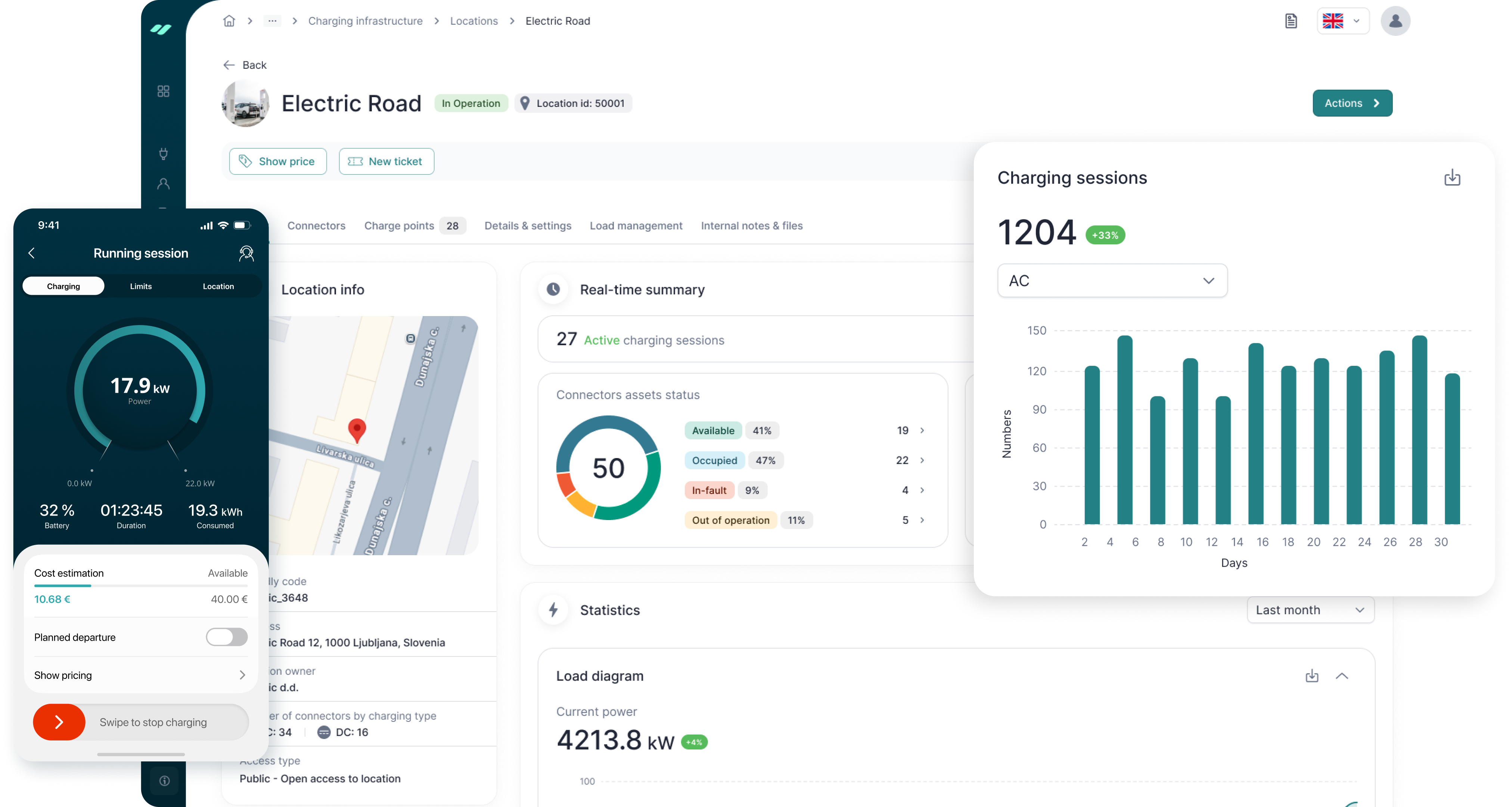

Two months of releases in one edition. The Operator Portal shipped twice since our July update, with 1.254 in August and 1.255 in September, and the native mobile apps moved to 2026.8.0. Between them, the updates touch load management, roaming, access control, payments and the Urchin API, for the operators running networks on Ocean and the drivers charging on them. Here's what shipped.
Operator Portal
Keep one connector for your own drivers, even on a public location
Until now, access was decided per location: open to everyone, or restricted to your local list. With 1.255 you can mark a single EVSE as private, whatever the access type on its location. Picture a two-connector charge point outside a company building: EVSE 1 stays public for visitors, EVSE 2 is private for employees, and only drivers on the location's local list can start a session there. The setting is off by default. One thing to know: most charge points share one RFID reader across their connectors, so an unlisted card is accepted at the reader and refused a moment later, once Ocean knows which connector the driver chose. Useful context for the next "my card worked but charging didn't start" ticket.
Equal Share keeps the first arrivals charging when capacity runs short
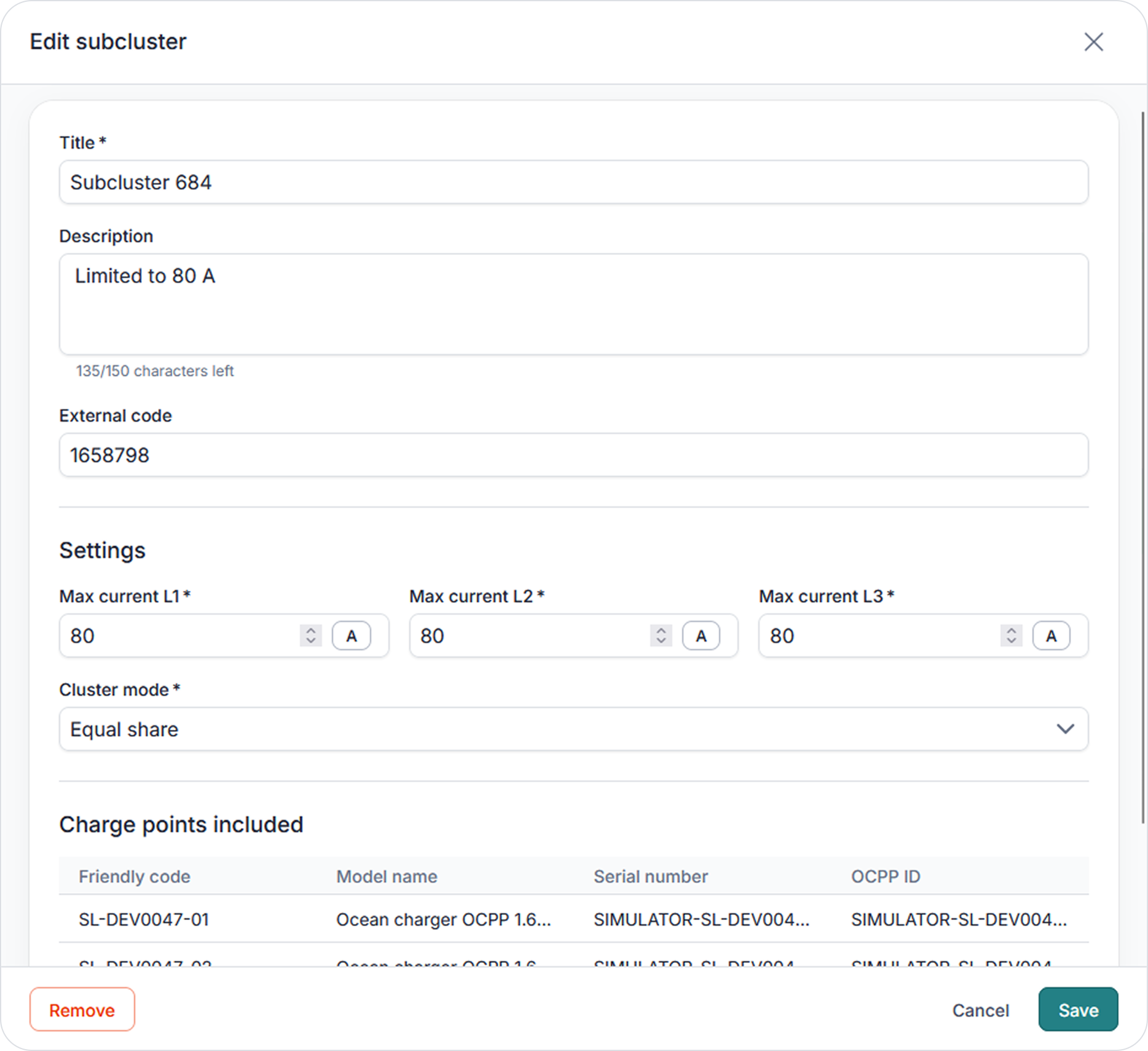
Equal Share, the load management mode we introduced in July, splits capacity evenly across active sessions. Until now, when that split fell under the minimum current a charge point can deliver, every vehicle stalled. It now falls back to first-come-first-served below that threshold. Take 20 A of capacity and four cars: an even split is 5 A each, under the 6 A minimum, so the three that arrived first get 6 A and keep charging while the fourth waits at 0 A until one of them finishes. Drivers who arrived first actually charge, instead of nobody charging.
Throwaway email addresses stop at the signup form
Every registration form now runs two checks: one on the address format, catching alias tricks with dots and plus signs, and one on the domain, against a regularly updated list of disposable email providers. Both are on by default, on every form, including the ones you built long ago. A driver signing up with a mailinator.com address is asked for a permanent one. Fewer junk accounts, less fraud, and a user base you can actually reach.
An SMS the moment a charge point goes offline
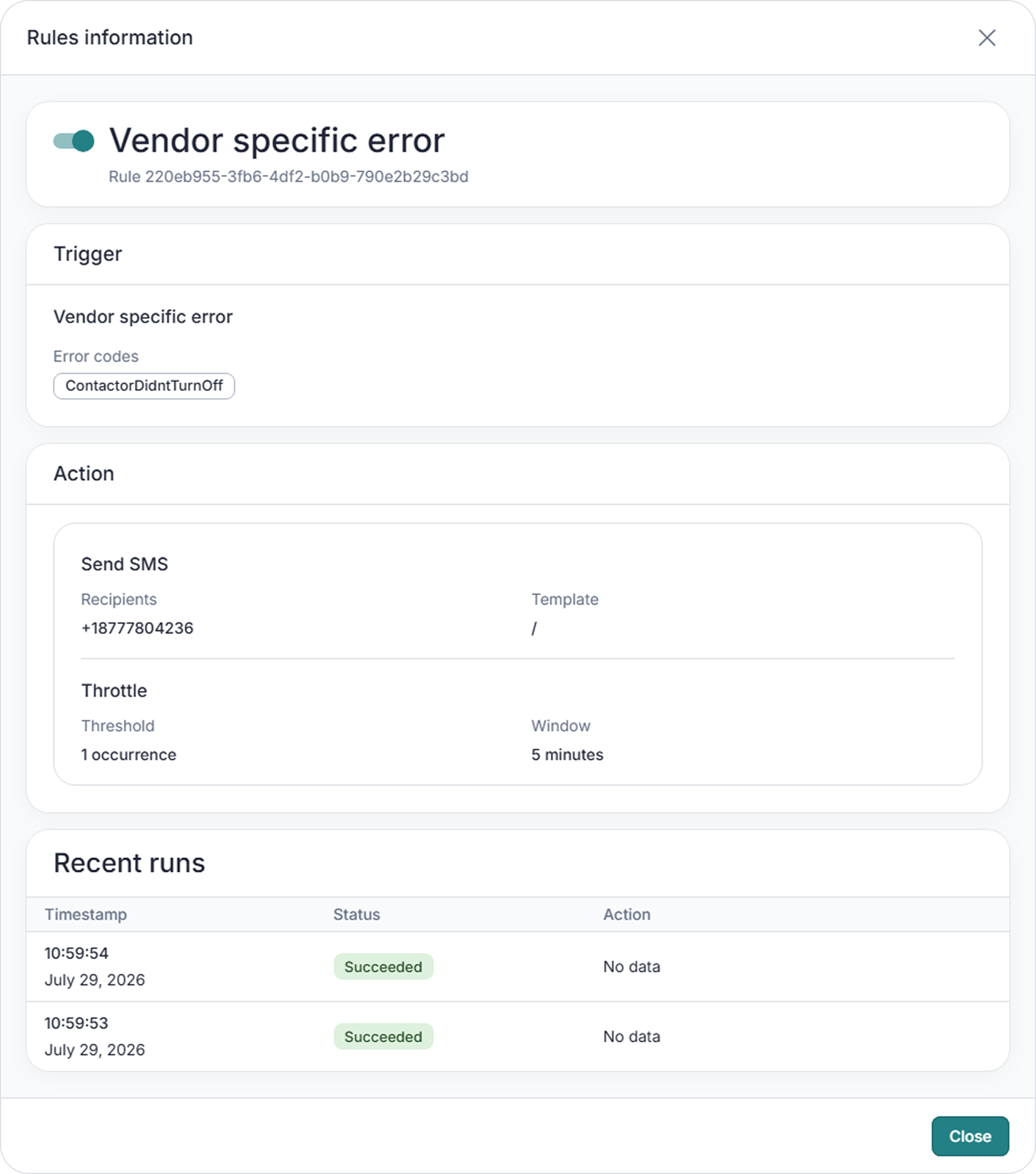
Automation rules can now send an SMS. Choose a trigger such as a charge point going offline, a connector reporting a fault or a failed payment, add the phone numbers of the people who need to know, and set a throttle so one flapping charge point does not wake the whole team at 3 a.m. This is alerting for your operations staff rather than a driver channel, and it runs through Twilio, which Ocean enables for your instance on request.
Roaming partners only see charge points their drivers can pay for
A new "Export only EVSEs with roaming tariff" setting on a roaming connection removes EVSEs without an active roaming tariff from the CPO export. Partner apps stop listing charge points their drivers cannot pay for, and the failed roaming starts that follow stop with them. A deliberately free 0.00 tariff still counts as a tariff and stays exported.
One Payter API key across all your Ocean instances
Payter Cloud now accepts a single API key shared across multiple Ocean instances, so operators running several stop provisioning and rotating one credential per instance. A related fix gives the Payter authorisation call its own timeout, so a slow terminal no longer means a session that fails to start.
Fewer round trips for integrators
Three Urchin API changes take work out of driver-facing apps. Prices for every connector at a location now come back in one request, by user ID or by email, instead of a loop over connectors. An invoice can be fetched straight from a charging session ID. And the preauthorisation remote-start endpoint accepts a company name and VAT number, so business customers get a proper business invoice from the same flow, and returns the user and identification that actually started the session.
Mobile Apps
Require a valid payment card before drivers continue
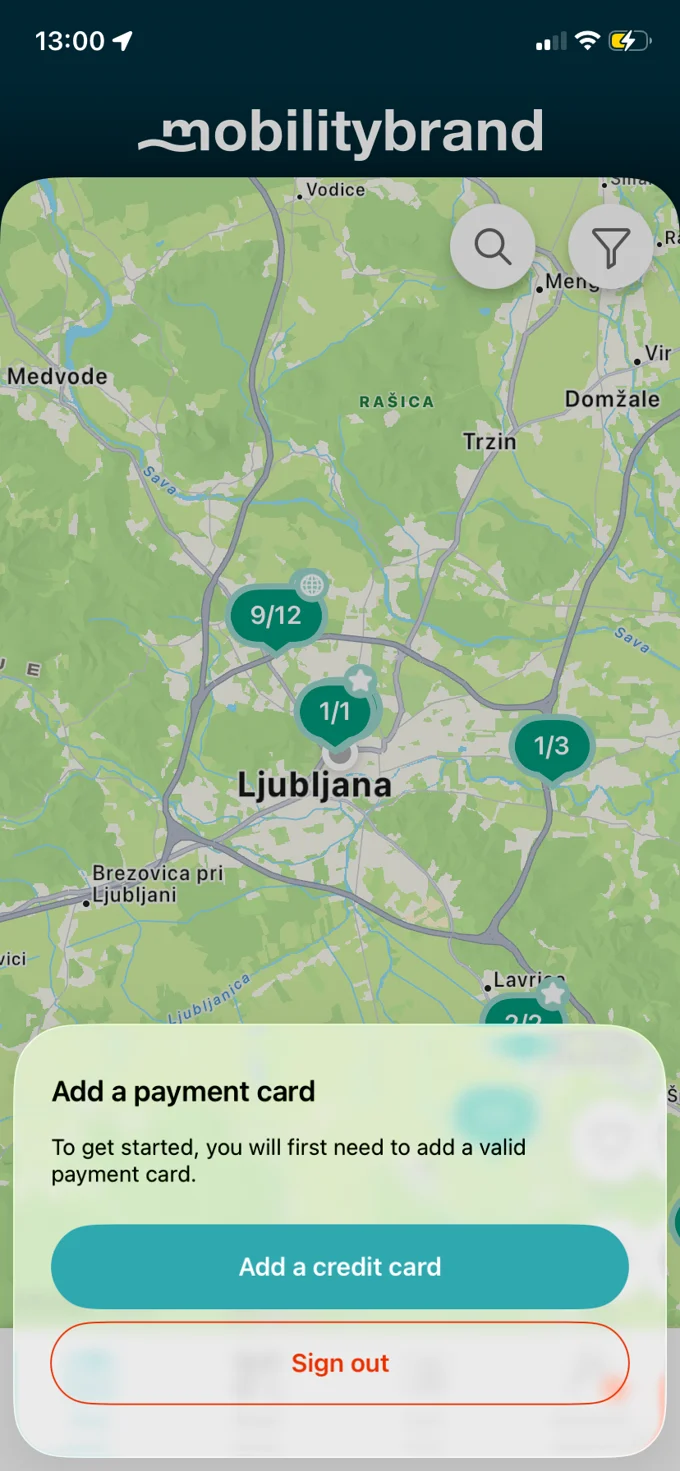
Drivers without a saved card can now be prompted to add one right at login, before they get anywhere near a charge point. Fewer sessions start without a working means of payment, so fewer failed charges, less chasing unpaid sessions, and fewer support tickets that begin after the cable is already plugged in. The feature stays off until you switch it on in the Operator Portal, and it applies to MIT contract types with a monthly or annual subscription. If your contracts sit outside that, talk to us before planning around it.
Annual subscription plans next to monthly ones
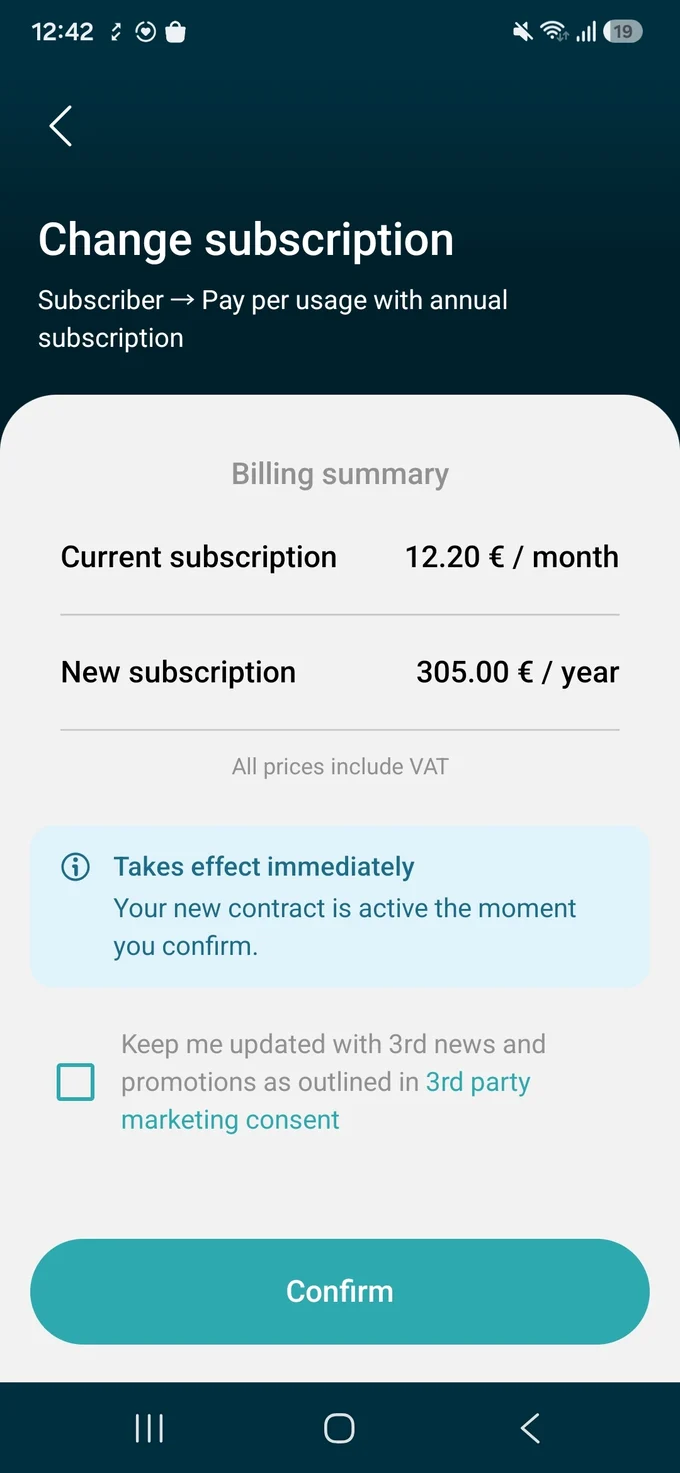
Manage Subscription now supports annual plans with pricing shown per year. Longer commitments, one payment to process instead of twelve, and a clearer picture of recurring revenue. Drivers on a contract that does not allow plan changes now see why, with a direct link to your help desk instead of a dead end.
Two things to do before you publish 2026.8.0
On Android, the app now uses Google's Places API (New). Enable it in your Google Cloud Console on the API key the app already uses, or place search and address lookup stop working for drivers on 2026.8.0, and keep the legacy Places API active for drivers still on older versions. On iOS, Apple added Age Ratings questions about social media capabilities in App Store Connect, and they must be answered before any new build is submitted. Both take minutes.
Also in this Release
Beyond the highlights, the two portal releases added 7 new features and 17 improvements and resolved 22 issues.
Among the improvements: more Urchin API endpoints moved to v2 (charge point configuration and roaming charging sessions among them), longer timeouts for local list synchronisation to charge points, OCPI 2.3 parking restrictions viewable and editable in the legacy Operator Portal, the parking areas introduced in July now editable in place, charge point warranty expiry and location opening hours in connector responses, and Description, Category and Category Type in the maintenance task CSV export.
A new instance setting lets the driver app's map open at a closer zoom level, and takes effect with the next app release.
Among the fixes: a disconnected charge point receiving repeated remote-start commands can no longer block remote actions for every other charge point, zero-cost tariffs no longer inherit the default three-hour session cap, removing a vehicle from an account now also removes its AutoCharge ID so it cannot start sessions billed to the old owner, invoice downloads return the document instead of JSON, and the "ghost" session that could flash in CRM right after a remote start is gone.
On mobile, 2026.8.0 also refreshed the Charging limits and Support ticket screens on Android, which now targets API level 36 in line with Google's requirements, and smoothed the subcategory choice when raising a ticket on iOS. iOS and Android together shipped 24 bug fixes, including session and payment card states that did not refresh reliably, plus smaller client-specific fixes. New default English translations for the payment card prompt, the subscription lock-in messages and annual pricing are ready for you to localise, and as always, update your App Store and Google Play listings for the new version.
Catch your next wave
That's two months in one. We'll keep highlighting the changes that matter most, whether you're operating a charging network on Ocean or just keeping an eye on where the platform is headed. See you next month. 🌊
Discover more Blogs




Our trusted partners